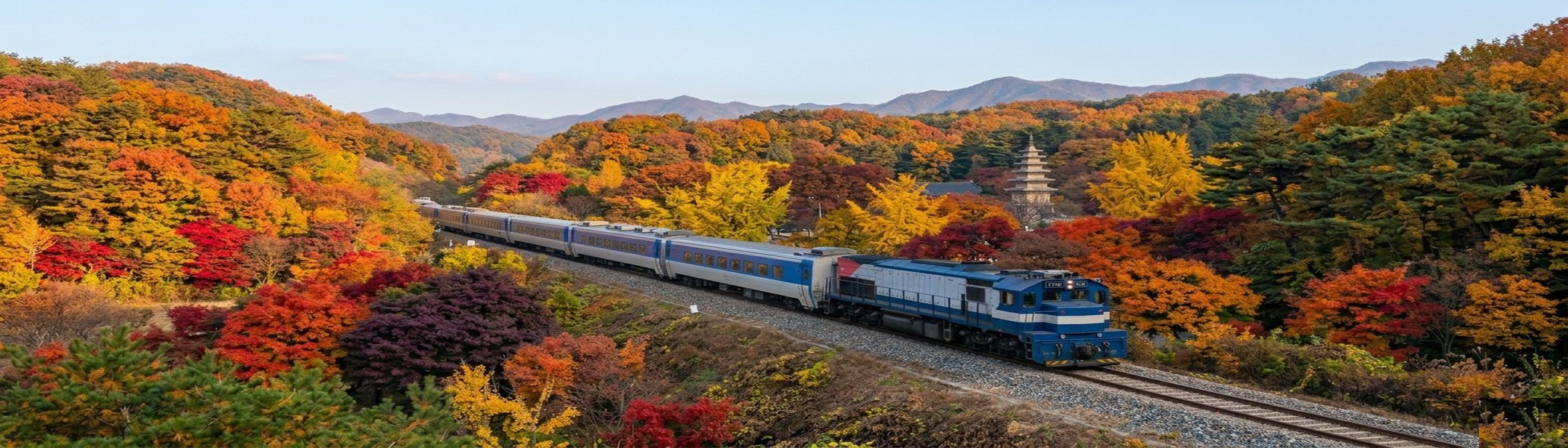
Mugunghwa intercity train travelling through the South Korean countryside at dusk
Operated by Korail · South Korea

Mugunghwa Train — Korea's Heart Line

Named after the Rose of Sharon, South Korea's national flower, the Mugunghwa connects hundreds of cities and towns across the Korean peninsula — affordably, comfortably, and on time.

150 km/h
Top speed
500+
Stations served
3
Seat classes
1969
Year introduced
WiFi
On modernised sets
About the train

What is the Mugunghwa train?

The Mugunghwa (무궁화호) is South Korea's most widely operated intercity train service, run by Korail (Korea Railroad Corporation). Named after the Mugunghwa — the Rose of Sharon and South Korea's national flower — it has been connecting the Korean peninsula since 1969, making it a beloved and essential part of the country's rail heritage.

Operating at speeds of up to 150 km/h, the Mugunghwa serves a semi-express function: it calls at more stations than the high-speed KTX, giving travellers access to smaller cities, coastal towns, and rural communities that faster services skip. It remains one of the most affordable and accessible ways to explore South Korea by rail.

Named after South Korea's national flower

Mugunghwa (무궁화) means "eternal blossom" — the Rose of Sharon, which symbolises perseverance and the spirit of the Korean people. The name was given to the service to reflect its enduring connection to communities across the nation.

Operated by Korail since 1984 in its modern form

While express rail in Korea dates back further, the Mugunghwa brand was formalised in 1984 as Korail restructured its intercity tiers. The fleet has since been progressively modernised with newer rolling stock and improved passenger facilities.

The most extensive rail network in Korea

The Mugunghwa reaches over 500 stations across all major lines — Gyeongbu, Honam, Jeolla, Donghae, Jungang, and more — making it the most geographically comprehensive intercity train service in South Korea.
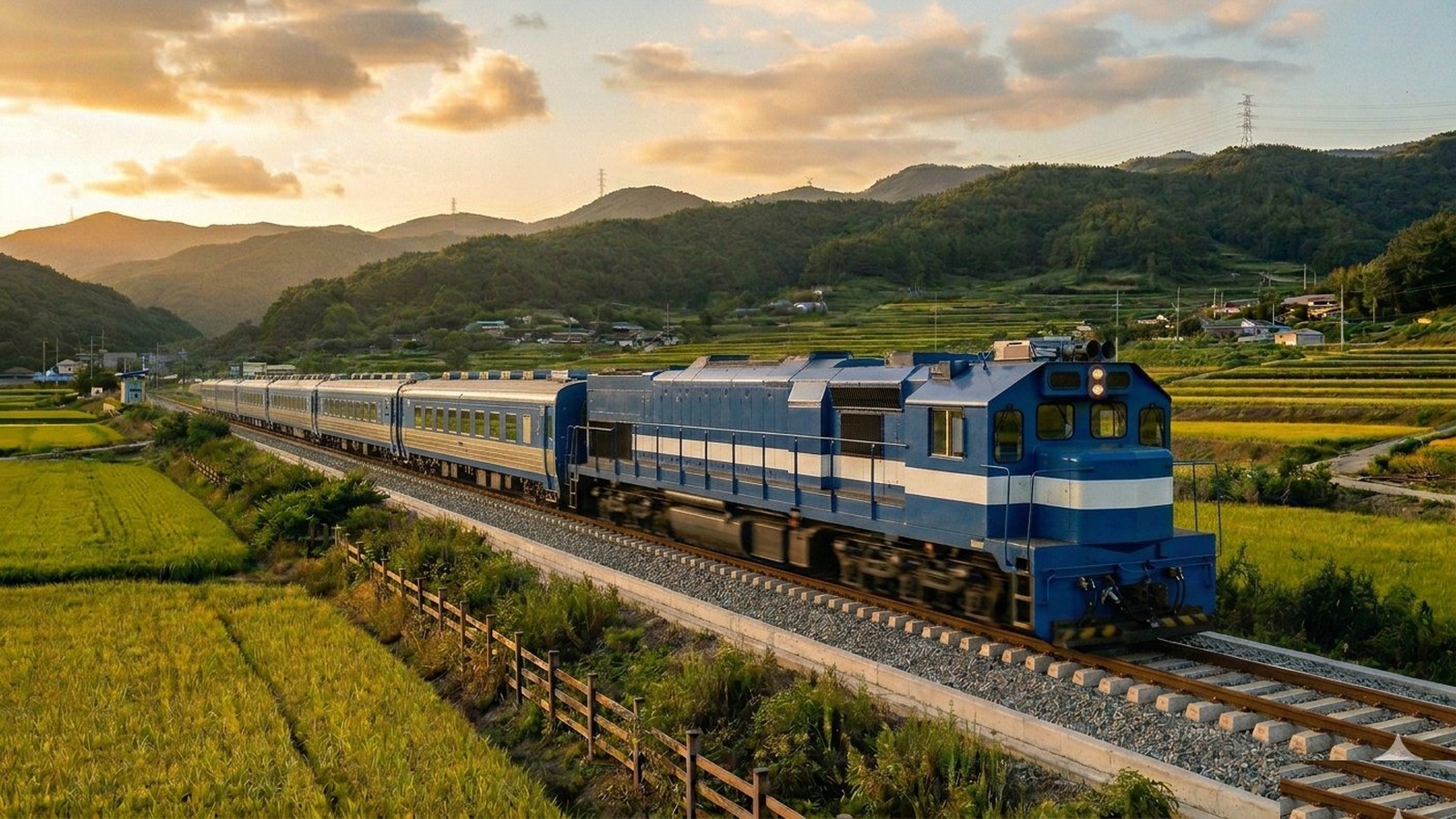
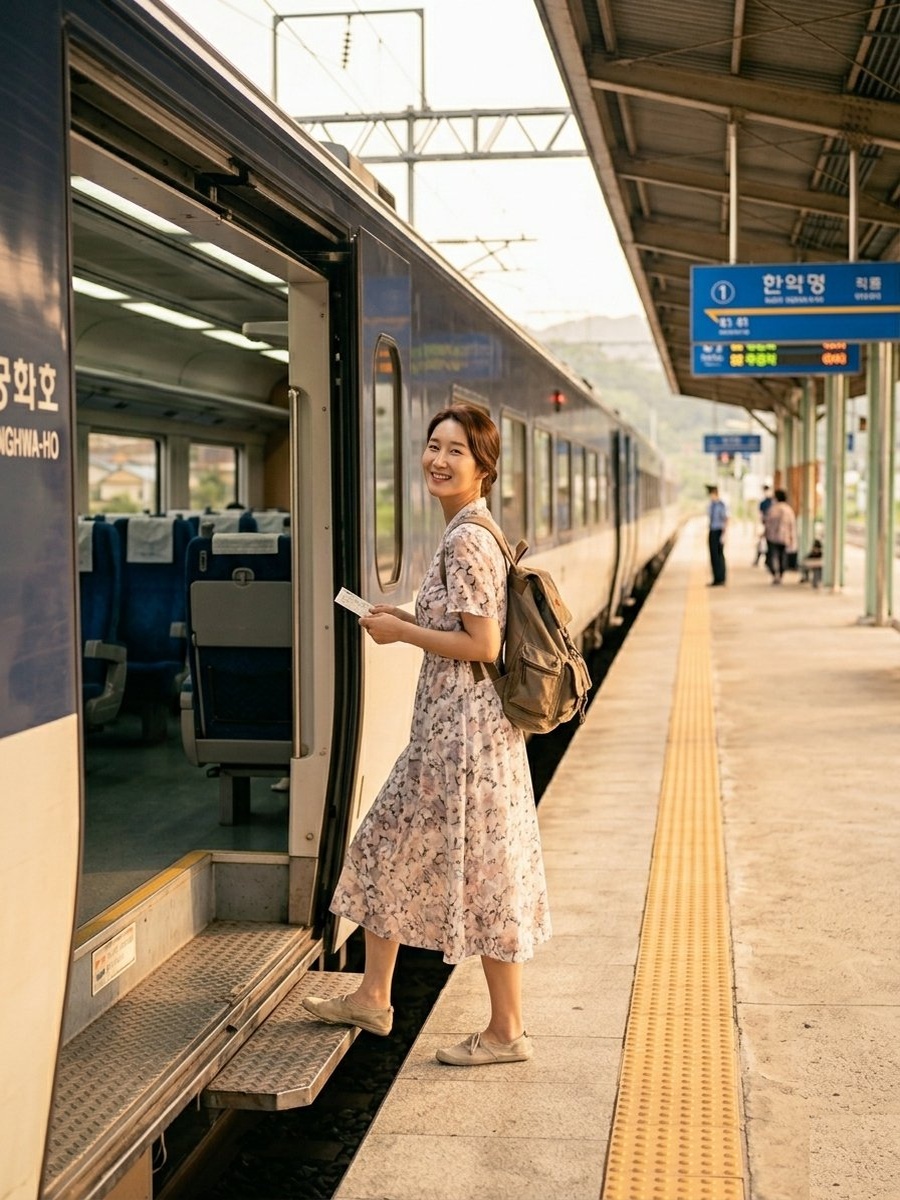
Korail Mugunghwa intercity train in navy blue livery at a South Korean station platform
Mugunghwa train crossing an autumn river bridge in the South Korean countryside

"The Mugunghwa doesn't just connect cities — it connects you to the heart of Korea, one station at a time."

Korea's most beloved intercity journey
Where it goes

Mugunghwa train routes across South Korea

The Mugunghwa serves nine major rail lines, reaching destinations from the capital to remote coastal towns.

Seoul Busan
approx. 5 hr 30 min 450 km
Seoul Mokpo
approx. 5 hr 20 min 410 km
Seoul Gwangju
approx. 4 hr 30 min 340 km
Seoul Gyeongju
approx. 4 hr 10 min 370 km
Seoul Yeosu
approx. 5 hr 0 min 380 km
Seoul Jinju
approx. 5 hr 0 min 400 km
Cheongnyangni Gangneung
approx. 3 hr 20 min 230 km
Seoul Andong
approx. 3 hr 30 min 260 km
Busan Pohang
approx. 1 hr 20 min 85 km
On board

Mugunghwa train seat classes

The Mugunghwa offers practical, comfortable seating options to suit every type of traveller and budget.

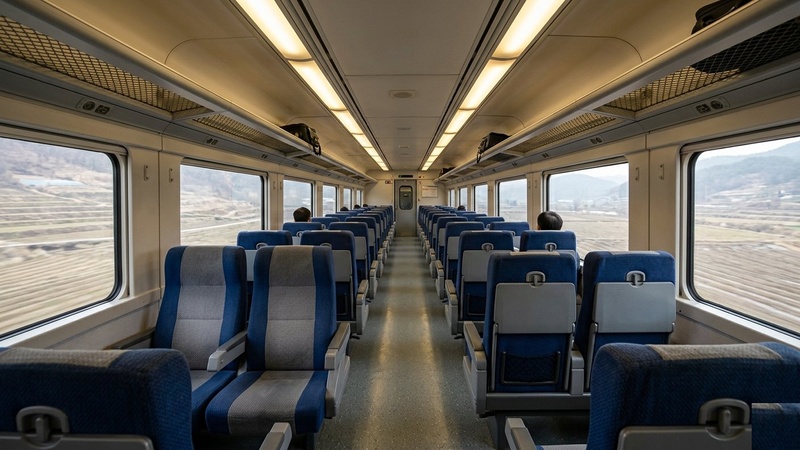
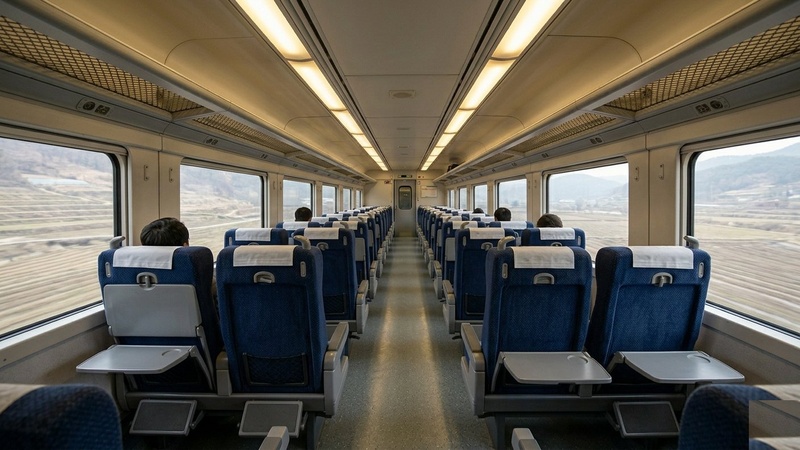
Mugunghwa General Class interior with navy blue reclining seats and large windows
Economy

General Class (일반실)

The standard carriage on all Mugunghwa services. Comfortable, clean seating with a 2+2 configuration and adjustable headrests — everything you need for a relaxed journey across South Korea at an affordable price.

  • 2+2 seat configuration
  • Reclining seats with adjustable headrests
  • Fold-down tray tables
  • Power outlets at most seats (newer sets)
  • Overhead luggage racks
Book General Class
Mugunghwa Udeungseok upgraded class interior with wide reclining seats in a 2+1 layout
Upgraded

Udeungseok (우등석)

Available on selected Mugunghwa services, Udeungseok offers a noticeably more spacious experience with a 2+1 seating arrangement, wider chairs, and enhanced legroom — ideal for longer journeys such as Seoul to Busan.

  • 2+1 seat configuration
  • Extra-wide reclining seats
  • Personal footrest
  • Cup holder and fold-down tray
  • Power outlet at every seat
Book Udeungseok
Mugunghwa Family Cabin semi-private compartment with facing seats and central table
Group & Family

Family Cabin (패밀리룸)

On select long-distance Mugunghwa services, the Family Cabin provides a semi-private enclosed compartment for up to four passengers — perfect for families, groups of friends, or anyone wanting a more private journey.

  • Enclosed compartment for up to 4
  • Facing seats with central table
  • Sliding door for privacy
  • Extra luggage storage
  • Available on overnight routes
Book Family Cabin

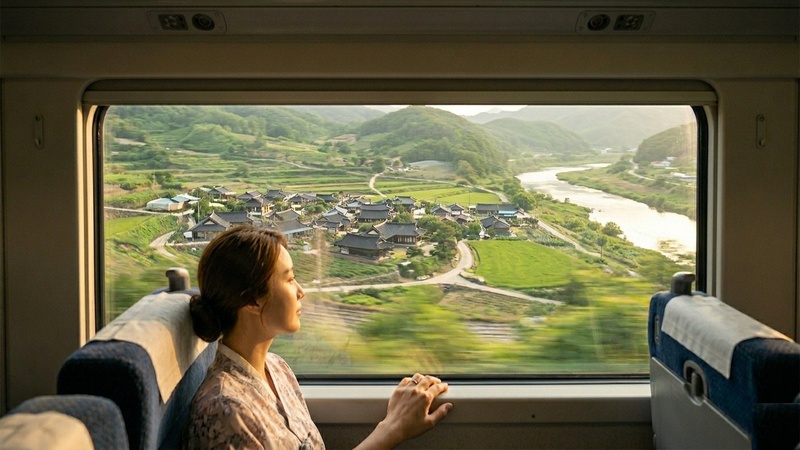
The Mugunghwa is the soul of Korean travel. You pass through rice fields, mountain valleys, and coastal villages — places no high-speed train ever stops. It is slow enough to notice the country, and that is exactly the point.

Traveller review · Seoul to Gyeongju
On board facilities

What's on the Mugunghwa train?

Modern Mugunghwa sets include a range of amenities to make your journey comfortable.

Free WiFi

Complimentary WiFi is available on modernised Mugunghwa rolling stock, allowing passengers to browse, stream, and stay connected throughout their journey across South Korea.

Snack Car

Many Mugunghwa services include a dedicated snack or dining car (식당차 or 매점) serving Korean snacks, hot drinks, cup noodles, and light meals — a traditional feature of long-distance Korean rail travel.

Power Outlets

Standard 220V power outlets are fitted at or near most seats on newly refurbished Mugunghwa carriages, so you can charge your devices without worrying about battery life on longer trips.

Quiet Zones

Designated quiet carriages are available on selected Mugunghwa services, providing a peaceful environment for travellers who wish to rest, read, or work without disturbance during their journey.

Family Zones

Family-friendly carriages on certain Mugunghwa trains feature additional space, pram-friendly seating areas, and proximity to onboard toilet facilities — making travel with young children much easier.

Accessible Carriages

Mugunghwa trains include wheelchair-accessible spaces and priority seating. Korail stations across the network are equipped with lifts and ramps, and staff assistance is available upon request at staffed stations.

Bicycle Transport

Folding bicycles may be brought on board the Mugunghwa as hand luggage at no extra charge. Full-size bicycles must be disassembled, boxed, and checked in as oversize baggage at staffed Korail stations.

Mobile Ticketing

Korail's app and partnered booking platforms allow you to purchase, store, and display Mugunghwa tickets on your smartphone. QR code scanning at gates means you can travel completely paperless end to end.

Questions & answers

Mugunghwa train — frequently asked questions

Everything you need to know before boarding the Mugunghwa. Still have questions? Our booking partners can help.

Book tickets
What is the Mugunghwa train? +

The Mugunghwa (무궁화호) is South Korea's most widely used intercity express train, operated by Korail (Korea Railroad Corporation). Named after the Mugunghwa — the Rose of Sharon — South Korea's national flower, it has connected cities and towns across the peninsula since 1969. It serves as a semi-express service, stopping at more stations than the high-speed KTX and making it ideal for reaching mid-sized cities and rural areas affordably. You can book Mugunghwa tickets online at highspeedtrains.com.

How fast does the Mugunghwa train travel? +

The Mugunghwa operates at a maximum speed of 150 km/h (93 mph). As an intercity semi-express service, it is not classified as a high-speed train like the KTX (which reaches 300+ km/h), but it provides reliable and comfortable travel across South Korea's extensive rail network.

What seat classes are available on the Mugunghwa? +

The Mugunghwa offers three main seating options. General Class (일반실) is the standard 2+2 seat configuration available on all services. Udeungseok (우등석) is an upgraded option with wider seats in a 2+1 layout, offered on selected longer-distance routes. Family Cabins (패밀리룸) provide enclosed semi-private compartments for up to four passengers on select overnight or long-haul services.

Does the Mugunghwa train have free WiFi? +

WiFi availability depends on the rolling stock. Newer and recently refurbished Mugunghwa trainsets offer complimentary onboard WiFi. Older sets may not have WiFi, though most Korean mobile networks provide strong 4G/5G coverage along main rail corridors, so mobile data is a practical alternative. Power outlets for charging are available at most seats on modernised carriages.

Do I need a reservation to ride the Mugunghwa? +

Seat reservations are strongly recommended, particularly around major Korean public holidays such as Chuseok (추석) and Seollal (설날), when trains sell out weeks in advance. Outside peak periods, walk-up travel is often possible, but booking ahead guarantees your preferred seat. You can book Mugunghwa train tickets in advance through highspeedtrains.com, Korail's official website, or any staffed Korail ticket counter.

Can children travel on the Mugunghwa at a discount? +

Yes. Children aged 4 to 12 receive a 50% discount on standard Mugunghwa fares. Children under 4 years old who do not occupy a dedicated seat travel free of charge. Group discounts may also apply for family bookings — check at time of booking for the latest offers.

Can I bring a bicycle on the Mugunghwa? +

Folding bicycles can be carried on board the Mugunghwa as hand luggage free of charge, provided they are folded and placed in a bag or cover. Full-size bicycles must be disassembled, packed into a box, and checked in as oversized baggage at a staffed Korail station. Bicycle-friendly routes are also listed on the Korail website.

Does a Korail Pass cover Mugunghwa trains? +

Yes. A valid Korail Pass covers unlimited travel on Mugunghwa trains, with seat reservation included at no additional cost. The Korail Pass is available in several formats — 2, 3, 4, or 5 days — either consecutive or as flexible travel days within a 10-day window. It is available to foreign nationals and can be purchased from authorised international rail booking platforms.

Ready to ride the Mugunghwa?

Find the best fares and book your South Korea train journey today.

Book Mugunghwa Tickets